Wednesday, July 13, 2011

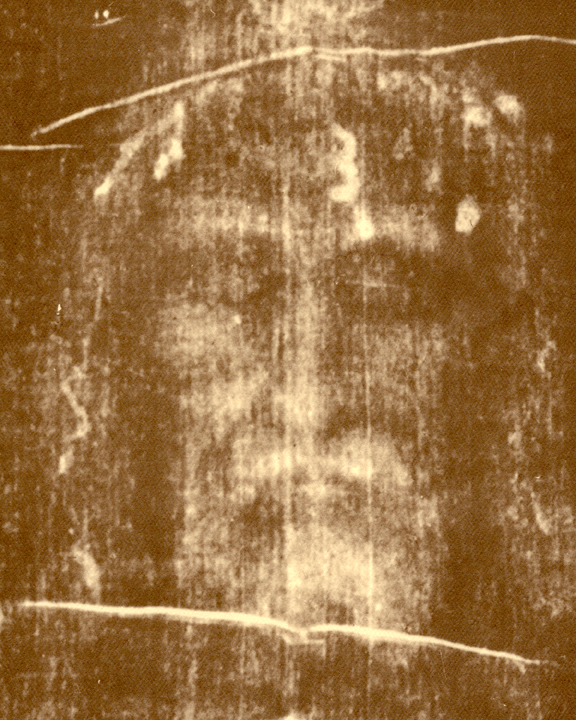
Where was the Shroud of Turin from 1204 to 1357?

http://www.toptenz.net/wp-content/uploads/2010/04/shroudofturin.jpgWe know that the crusaders of the Fourth Crusade looted the treasures of Constantinople and carried away many riches and relics. The Edessa Cloth disappeared with other priceless treasures. Evidence suggests that the Edessa Cloth was taken to Athens. About a year after Constantinople was plundered, Theodore Ducas Anglelos wrote in a letter to Pope Innocent III:
The Venetians partitioned the treasure of gold, silver and ivory, while the French did the same with the relics of saints and the most sacred of all, the linen in which our Lord Jesus Christ was wrapped after His death and before the Resurrection. We know that the sacred objects are preserved by their predators in Venice and France and in other places, the sacred linen in Athens
 
In 1207, Nicholas d'Orrante, Abbott of Casole and the Papal Legate in Athens, wrote about relics taken from Constantinople by French knights. Referring specifically to burial cloths, he mentions seeing them "with our own eyes" in Athens. 

There is some indication that the Shroud may have passed into the hands of an order of warrior monks known as the Knights Templar. This order was founded in the early 12th century among Crusaders in the Holy Land.

Ian Wilson and John C. Iannone relate stories that link the Edessa Cloth to the Marquis Boniface de Montferrat who led the attack on the Bucholean Palace and Pharos Chapel in Constantinople where the cloth was kept; how when it appeared in Athens it was in the trust of Otto de la Roche, an associate of Boniface; and how it may have passed into the hands to the Knights Templar from there. They go on to relate how the knights were later accused of secret idol worship of a "bearded head." We know, also, that the Templars had amassed a significant cache of relics from the Crusades. 

In 1945, at a Knights Templar site in Templecombe, England, a panel of wood was found above a plastered ceiling that contained a painted image of Jesus' head that closely resembles the face on the Shroud. Ian Wilson tells us that carbon 14 dating of the wood panel dates the panel to as early as 1280 CE.

http://fc01.deviantart.net/fs32/f/2008/227/4/a/Templar_Knight_by_XxMaRtZ93xX.jpgThe Shroud's history suffers from gaps in documentation. This is true of almost all ancient artifact. There are plausible reasons why the Shroud may have been concealed from public knowledge. In Jerusalem, it would likely have been sought out and destroyed by the Temple authority had its very existence been known. While that is conjecture, it is nonetheless a possible explanation why no early mention is made of it. 
 
During the many persecutions of the first three centuries valuable relics, writings and ceremonial items of the church were routinely destroyed. We know of early persecutions of Jesus' post-crucifixion followers in Jerusalem. There is evidence of persecutions in Edessa as early as the latter part of the first century. And there were the numerous Roman persecutions that persisted until Constantine. If, in fact, the Shroud was taken to Abgar V of Edessa, it might have been hidden in the city walls as early as the reign of Ma'nu VI who is thought to have reverted to paganism. 

If the Templars obtained the Edessa Cloth in Constantinople, in Athens, or later, it is perfectly reasonable to think that they might have concealed it. We know that they were a powerful, rich and secretive organization. Under Phillip IV of France, efforts to suppress their power and acquire their assets resulted in extraordinary charges being leveled against them, including secret rituals of worshipping an image with a bearded man's face. In 1307, the leaders of the Templars, were executed. One of the leaders was a knight called Geoffrey de Charny, possibly a relative of the Geoffrey de Charny who displayed the Shroud in Lirey in 1357 and was reluctant to explain where it came from.

http://www.theknightshop.co.uk/catalog/images/AG288.jpgAttempts to fill the gaps from legend and possible scenarios is but theory and plausible explanations. It is not history. It is science that comes to the rescue with hard evidence that the Shroud was at one time in Jerusalem and in the environs of Constantinople and Edessa. It is the study of textiles that identify the cloth as like those once used at Masada that link the Shroud to that period and place in history. Art history strongly corroborates connections between the Edessa Cloth and the Shroud. And the Sudarium of Oviedo adds another piece to the puzzle of the Shroud's history. We can conclude, with a high degree of certainty, historically, that the Shroud dates to the sixth century. Likely, it goes back to Jerusalem in the first century. We just cannot be sure exactly where it has been and when before the fourteenth century.

Tuesday, July 12, 2011

King Arthur: Knight of the Round Table or Knight Templar?

For centuries, tales of King Arthur and his glorious Knights of the Round Table have been passed down from generation to generation. Every young boy knows of how a wizard named Merlin appeared to Uther Pendragon, handing him a young child named Arthur; and later Arthur pulled his sword, Excalibur, from a stone and became King of England. Yet as historians recently began scouring history books for answers, King Arthur and his famous wizard companion, Merlin, have been a topic of interesting debate. It's quite obvious that some portions of Arthurian legends have been exaggerated, but was King Arthur real, and did the Knights Templar play a twisted role in this famous tale?

King Arthur and Merlin were first written about in 1135 in a book called History of the Kings of Britain, written by an ancient monk, Geoffrey of Monmouth. Geoffrey's tale describes a real historical king named Vortigern, who set out to build a massive and impenetrable tower in Wales. To the king's demise, the tower collapsed every time he built it. Vortigern turned to the wise oracles of Britain who told him the tower would only stand if he sprinkled the blood of a fatherless boy on the foundation stones. Not to be deterred by petty murder, the king set out to find such a boy.

King Vortigern traveled about his kingdom until he stumbled upon two young lads in the midst of a quarrel. One of the boys was ridiculing the other for not having a father. The king grabbed the young Merlin and rode off to find the boy's mother. Merlin's mother informed the king that she had been seduced by a mysterious man that disappeared soon after the encounter. The king cruelly told Merlin’s mother that Merlin was to be sacrificed for the glory of his great tower.

Merlin was a special boy and he had a gift of foresights. So when King Vortigern threatened death, Merlin channeled his inner seer's gift of prophecy and insight. Merlin kindly told Vortigern of a vision he had about the king’s sinking tower. According to the vision, the reason Vortigern’s tower kept sinking was because it was being built on a pool of water. He told the King there was a swamp under the land and if he dug the land beneath the tower, he would find this swamp and in the swamp he would also find two serpents. 

Vortigern had his men dig the land beneath the proposed tower and found such a pool of water and in the swamp he found the two serpents. The King chose to keep Merlin around and the young prophet proved his worth over the years, spewing forth prophecies that helped Vortigern win battles and conquer new lands.

Finally, Merlin had a vision of King Vortigern’s death. Merlin told Merlin one day he would be burned alive in his impregnable tower. Years later a young king named Aurelius Ambrosius, invaded Britain and burnt the tower to the ground with Vortigern inside.

According to Geoffrey of Monmouth’s history of Britain, Aurelius didn't remain king for long, as he was poisoned. After his death, his brother Uther Pendragon became king. While king, Uther Pendragon declared peace with the Scots and invited all the nobles of Scotland to his palace for a celebration.

That night Uther Pendragon fell in love with the wife of a powerful lord of Scotland. He became entranced with Igerna, the husband of Duke Gorlois. Whence the attraction became known to the Duke, he snatched his wife and rode back to Scotland.

Uther Pendragon brought forth his armies and followed Duke Gorlois, for he wanted nothing more than to be with Igerna. Once in Scotland, Pendragon was humbled by the duke's impregnable tower. At his wits end, Uther Pendragon called forth the magician that had been loyal to the kings of Britain. Merlin devised a plan to sneak Uther Pendragon into the tower and he used his powers to make Uther appear identical to Duke Gorlois. With the duke’s look’s, Uther was allowed into the tower, where he slept with Igerna.

Meanwhile, Uther’s clever general’s found their way into the tower and killed Duke Gorlois. Satisfied with the outcome, Uther Pendragon took Igerna back to England to be his wife where she bore him a child. Uther remained the King of Britain for fifteen years until he also was poisoned, and his son Arthur took the crown at a young age.

This is the tale of King Arthur and Merlin as Geoffrey of Monmouth first told it. There were no knights of the round table, no sword in the stone, and no holy grail. However, with any successful tale, more starving writers would put their twist on it and there would be many more versions to come. The only difference is that Geoffrey of Monmouth wrote this version as a non fictional account of the history of Britain. Was there truth behind his account of King Arthur?
 
Will the real King Arthur please stand up?

Historians tell us that most likely the story doesn't even take place in medieval times, but around 470 A.D. It seems Arthur wasn't a king but a general of the Roman army that was left behind in Britain after the Romans conquered a portion of the island. The Romans had taken most of their armies back to defend Rome in a time of need, but they left small outposts to keep a presence in their newly acquired lands.

The Romans had conquered the southern part of the British Island, but the Scots from the north were hardly subdued and at the same time the Saxons began invading from the Netherlands. The native Britons were calling out to the Romans for help, but the Romans were all but tied up in Gaul. 

Eventually a Briton named Vortigern, rose up and declared himself king. Vortigern then allied himself with the invading Saxons to fight against the Scots. It was a shaky alliance and eventually Vortigern ran out of funds. The Saxons turned their back in Vortigern and decided to conquer Britain for themselves.

After Vortigern died, a Roman soldier named Aurelius Ambrosius rallied the Britons and began a series of campaigns against the Saxons. The war would last several decades and after Ambrosius died; his brother Uther Pendragon led the Britons. Uther was successful, but he too was killed making the way for another up and coming Roman General named Artorius, whom historians believe is the basis for the King Arthur.

Arthur all but stopped the Saxon invasion over the course of twelve battles. Geoffrey of Monmouth writes the last battle was the battle to be remembered, the Battle of Bandon in 518 A.D. After defeating the Saxons, Arthur spent the next several years trying to keep his newly created kingdom together. His allies were fighting amongst themselves and assassination was always on his mind.

Geoffrey of Monmouth tells us that Arthur was finally killed in the battle of Camlann. After the battle, Arthur' body was carried off to the Isle of Avalon. His body was hidden away from the Saxons, but the rumors began that Arthur wasn't really dead and would return to help Britain in her time of need.
Did King Arthur pull Excalibur from a stone to become King of England?

This is highly unlikely, but what is likely is that King Arthur pulled his sword from a Saxon after a battle and his skill as a warrior led him to become ruler of the Britons. In Latin, stone is translated as "saxo" which is very close to "Saxon". Since Arthur was fighting the Saxons it seems very likely that this was a translation error in the story. Further, Geoffrey of Monmouth calls King Arthur’s sword Caliburn, not Excalibur. This is a combination of two Celtic words, river and burn, which is most likely referring to the river Cale in which the sword was forged.

Was the Isle of Avalon real?

King Henry II of England became a huge fan of King Arthur after Geoffrey of Monmouth wrote the initial stories.  He became so infatuated he led his own investigations into the validity of the Arthurian tales. King Henry II was a well traveled man and on one such adventure, he came across a Welsh bard that told him the town of Glastonbury was Avalon Isle of the Arthurian legend and King Arthur was buried at the Church there between two pyramids. At one time the town of Glastonbury was completely surrounded by the English Channel.

Henry had been close with the Bishop of Glastonbury as the Abbott supported him to become King. The Abbot kindly declined the King's request to search for the body of Arthur in the church. The Abbey was already rich and famous with Christian pilgrims. It was rumored that Joseph of Arimathea was buried there as well. Joseph of Arimathea was the man that Christ gave the grail they used during the last supper. The story goes that after Christ's death, Joseph brought the grail to England.

So the king waited patiently and finally the story took an interesting twist. The Abbey of Glastonbury caught fire in May of 1184 and burnt to the ground. Everything was destroyed but the image of Our Lady of Glastonbury. Many saw this as a sign from God and one monk requested to be buried on the grounds between two crosses.  The two crosses were erected on marble pillars that could be described as pyramids.

The monks of the Abbey found a reason to dig up the burial site that could possibly house King Arthur or Joseph of Arimathea of the bible. After digging seven feet they hit a stone slab. They pried the slab open and on the underside was the inscription of a cross with a Latin engraving. The inscription read: “Here lies buried the renowned King Arthur in the Isle of Avalon.”

According to legend, the monks decided to keep digging and they burrowed down sixteen feet when they finally struck wood. They unearthed a large coffin and inside were two skeletons. The male skeleton had holes in his head from heavy blows and the smaller female skeleton still had wisps of blond hair. Could this have been King Arthur and Lady Guinevere? Most of Briton seemed to think so.

Most historians accuse the monks of Glastonbury of making the whole story up but there are two points that shouldn't be overlooked. First in 1963, the site was re-excavated and the excavation showed that the earth had been dug up as far as sixteen feet down. Second, if the Abbey of Glastonbury was said to also hold the body of St. Joseph, why wouldn't they have faked finding his body also. It would have given more credibility to the Abbey.

The persecution of the Knights Templar

https://blogger.googleusercontent.com/img/b/R29vZ2xl/AVvXsEgBqneKATpwj7rUS3fhg1GocfUoVwAmJ4g8ceh0CiqF-_hu_By9uPJp5mw8eWR9-s_NT2xVZIWgChKtRQXZnbyAEvY1_S6LbPNYg8c7YoDmdzr2bxTzkbBuUkmTsg6_3p7JE4XyoQvhvxg/s320/pope_1922704c.jpgAs the Knights Templar grew in influence and wealth they attracted powerful enemies, most notably King Philip IV 'the Fair' of France.

He envied the knights' great wealth and planned to seize their lands as a way of saving the French crown from bankruptcy. He took advantage of rumours swirling around the Templars' secret initiation ceremonies.
All Templars living in France were arrested at dawn on Oct 13 1307, and accused of crimes ranging from corruption to sodomy, witchcraft, heresy and idolatry. The day was a Friday and is said to have been the origin for the superstition that every Friday the 13th brings bad luck. They were interrogated and tortured into giving false confessions, their evidence made public in an attempt to tarnish the order's image.

Pope Clement V then became involved and, according to Vatican historians, tried to intervene to save the Templars in France. In 1308 he received a formal act of repentance from a group of senior knights and absolved them of heresy. But at the Council of Vienne in 1312 the Pope disbanded the Templars and issued arrest warrants for all remaining members, in order to keep peace with France and prevent a schism in the Church. Clement issued a Papal Bull which granted the lands of the Templars to the Knights Hospitaller, also known as the Knights of St John of Malta.

The remaining Templar leaders in France were executed, including the last Grand Master, Jacques de Molay, who was burned at the stake in Paris in 1314. Some rank and file Templars were absorbed into other military orders, while others escaped trial and persecution.

Three most famous chivalric orders

Dozens of military-religious orders sprang up during the Crusades in the Holy Land, but the three most famous are:

https://blogger.googleusercontent.com/img/b/R29vZ2xl/AVvXsEj8SCSakOVM5TxOR8P7aSGUMm06WRqCYQuU629Iahb8fCKlezYX9oaY9Z2Muk5Q1d4_62Toi2v5JgeUymsUznzSDaGfPha2Zn7vALCnkbMV3PLtVaNxM1KIYcFAFBKZYZocwzGorAqdfi4/s320/k_1922731c.jpgThe full name of the order was the "Poor Fellow-Soldiers of Christ and of the Temple of Solomon".
They were founded by a French knight, along with eight of his companions, in Jerusalem around 1119 and pledged to defend Christian pilgrims travelling to the Holy Land after the crusaders captured Jerusalem in 1099. 
Legends of its secret rituals, huge wealth and lost treasures have long fascinated conspiracy theorists.
The belief that the Templars were entrusted with the holy grail – said to be the cup from which Christ drank at the Last Supper or the receptacle used by Joseph of Arimathea to catch Christ's blood as he bled on the Cross – featured in Dan Brown's bestselling novel, The Da Vinci Code. They were also said to have been guardians of the Ark of the Covenant. 'The Last Templar', a 2005 novel by Raymond Khoury, topped the New York Times Bestseller list for 22 months.
The Knights of St John of Malta
The order's full name is the Sovereign and Military Order of the Knights Hospitaller of St John of Jerusalem. It is also known variously as the Knights of St John, the Knights of Malta, the Knights of Rhodes and the Knights Hospitallers. It was founded by Italian merchants from Amalfi, south of Naples, in the 11th century to protect Christians in the Holy Land, and set up a string of hospitals along the pilgrimage route from Europe to Jerusalem. When the Saracens recaptured the Holy Land in 1291, the order sought refuge first in Cyprus and then on the island of Rhodes. They were driven from there in the early 16th century and moved to Malta, where they fortified Valletta.
Knights of different nationalities – English, French, German – lived in quarters known as 'auberges'. Their uniform was a hooded monk's habit made of black camel hair with a white Maltese cross emblazoned on the chest. They were expelled from Malta by Napoleon in 1798 and eventually established their headquarters in Rome, on top of the Aventine Hill. Now known as the Sovereign Military Order of Malta, it is an internationally recognised sovereign body that prints its own postage stamps, flies its own flag and mints its own coins – a state without a territory. It is a charitable organisation that provides hospitals and humanitarian help in regions suffering from war, natural disasters and poverty and has been a permanent observer at the UN since 1994.
The Teutonic Knights
Like the two other military-religious orders, the Teutonic Knights were initially established to help Christian pilgrims on their way to the Holy Land, but later developed into an elite fighting force that took part in the crusades. It was formed at the end of the 12th century in the city of Acre. Its full name was the Order of Brothers of the German House of Saint Mary in Jerusalem. Membership of the order was small and confined to Germans, so when necessary its numbers were supplemented by mercenaries.
When crusader armies lost control of Jerusalem, the Teutonic Knights shifted their focus to the Baltic and the so-called Northern Crusades against pagan Prussians and Lithuanians. They established a strong presence until they were defeated by a Polish-Lithuanian force in 1410 at the Battle of Tannenberg (Grunwald) in what is now northern Poland. The defeat halted the Knights' eastward expansion and hastened the decline of the order. The order's motto was 'Help, defend, heal' and knights wore white cloaks emblazoned with black crosses. It exists today as a charitable organisation working mostly in central Europe.

Knights Templar heirs demand apology from Vatican

https://blogger.googleusercontent.com/img/b/R29vZ2xl/AVvXsEi9M3SOHtK77toU59f4m86vCnQfmd-ReC4PWPrca30d6o0SSzhNCC0KZzN9zffXfCq_Md4orzhYoODSC2OX09QeRzc_Y81tWzBRzerZXNLVsSznKwLtAqCdnggym6SJbzvx5iqtpwo8voA/s320/temp_1922699c.jpgThe heirs to the Knights Templar have demanded an apology from the Vatican for the murder of their last leader, who was burned at the stake in the 14th century.

The last Grand Master of the warrior monks who fought in the Crusades, Jacques de Molay, was executed in Paris in 1314 on charges of heresy, black magic and idolatry.  His death was part of a concerted campaign to suppress the chivalric order by King Philip IV of France, who had grown suspicious of the Templars' power and envious of their wealth. Although it was the French king who ordered de Molay to be put to death, the Templars have for centuries accused the Church in Rome of complicity. 
 
Pope Clement V initiated an inquest into the order which led to many knights being subjected to heresy trials, before disbanding altogether. The movement was reborn in the early 19th century as a charitable organisation and has branches around the world. The Italian chapter of the order has written to Pope Benedict XVI asking him to issue a pardon for de Molay and to acknowledge that he was a victim of false accusations.

"There was an enormous degree of complicity because Clement V, who was Pope at the time, was under huge pressure from King Philip," Walter Grandis, 64, the current head or Grand Prior of the Knights Templar in Italy, told The Daily Telegraph. "This was an appalling crime and a miscarriage of justice that the Church allowed to happen. "We're asking for de Molay to be pardoned so that we can finally turn a page in history and work towards reconciliation," said Mr Grandis, who recently wrote a book on the order, called The Templars: The Real Secret.

A document found in the Vatican Secret Archives a decade ago revealed that Clement V absolved some Templars of heresy, but the Church has never apologised for the order's persecution. 
 
The request for a pardon and apology was submitted to Dr Guzman Carriquiry Lecour, the under-secretary for the Pontifical Council for the Laity, a few weeks ago but will be discussed by modern-day Templars at a special conference in Turin on Friday and Saturday. A Vatican spokesman said the request was being considered. 
 
The inheritors of the Templar chivalric code have also launched a bid to rehabilitate de Molay, nearly 700 years after his death.

They achieved a small victory in March when a town in north-eastern Italy agreed to rename one of its squares in his honour.

A grand ceremony was held in Lusevera, a town in the Friuli-Venezia Giulia region on the border with Slovenia, during which the new name – Piazzale Jacques de Molay – was unveiled. A sign commemorates the knight as "a martyr to free thought".
 
"It is the first time in Europe that de Molay has been recognised in this way," said Mr Grandis.